Luxembourg and Kosovo launch ICT innovation and clean energy grant schemes
Kosovo 03.07.2026 Projet

Luxembourg and Kosovo have launched two new business support schemes that bring together digital innovation and clean energy as key drivers of private sector development. Through the ICT Innovation Grant Scheme and the second phase of the Clean Energy Grant Scheme, start-ups and enterprises will be supported to develop innovative solutions, reduce energy costs, improve competitiveness and contribute to Kosovo’s digital and green transition. The schemes were launched by the Ministry of Industry, Entrepreneurship, Trade and Innovation, the Ministry of Economy, and the Kosovo Investment and Enterprise Support Agency, in partnership with LuxDev, the Luxembourg Development Cooperation Agency.
Supporting innovation in Kosovo’s ICT sector
The ICT Innovation Grant Scheme aims to support start-ups and micro, small and medium-sized enterprises (MSMEs) in developing innovative products, services and processes in the information and communication technology sector.
The scheme has a total budget of EUR 1.16 million, co-financed by the Ministry of Industry, Entrepreneurship, Trade and Innovation and the government of Luxembourg. Of this amount, EUR 760,000 is dedicated to MSMEs, while EUR 400,000 will support start-up businesses.
Speaking at the launch, Minister Mimoza KUSARI-LILA underlined that the scheme aims to support economic development, innovation and new opportunities for Kosovo businesses. She noted that the projects supported through the scheme should provide innovative solutions in areas such as artificial intelligence, cybersecurity, blockchain, data analytics, process automation, software applications, online collaboration platforms, business management systems and other modern technologies.
For MSMEs, grants will range from EUR 30,000 to EUR 50,000 and will cover up to 50% of the total project cost. For start-ups, grants will range from EUR 15,000 to EUR 25,000 and will cover up to 80% of the total project cost. Applications will be submitted exclusively through the e-Kosova platform.
The scheme builds on Luxembourg’s continued support for innovation and private sector development in Kosovo through the Sustainable and inclusive growth in Kosovo project, helping businesses strengthen their competitiveness, develop new products and services, increase their export potential and contribute to job creation.

Advancing clean energy investments for businesses
The second phase of the Clean Energy Grant Scheme was also announced during the event. Implemented under the Luxembourg-funded Energy transition and climate mitigation in Kosovo project, the scheme supports manufacturing and processing enterprises to invest in renewable energy and energy efficiency measures. It aims to help businesses reduce electricity consumption and operating costs, improve competitiveness, promote sustainable production technologies and support Kosovo’s broader energy transition objectives.
Minister of Economy Artane RIZVANOLLI highlighted that the Clean Energy Grant Scheme will help SMEs invest in photovoltaic systems for self-consumption and energy efficiency measures, contributing to lower energy costs and a greener economy.
Nine businesses were selected for funding during the first public call. All approved projects focused on solar photovoltaic systems, with a combined supported capacity of almost 1 megawatt. The second phase will make EUR 880,000 available for new investments.
The relaunched scheme will continue to support investments in solar photovoltaic systems, solar thermal systems and battery storage, energy efficiency measures in business buildings and energy-efficient equipment for production lines. It also introduces updated application guidelines, a simplified implementation process and revised technical requirements to improve the quality of applications.

Investing in Kosovo’s future
Together, the two schemes demonstrate Luxembourg’s broader support for Kosovo in innovation, entrepreneurship, clean energy, skills development and private sector competitiveness.
Speaking at the launch, Head of Mission of the Embassy of the Grand Duchy of Luxembourg in Pristina, H.E. Eric DIETZ, said that the initiatives reflect Luxembourg’s continued commitment to Kosovo’s economic and sustainable development. He added that by supporting both digital transformation and the green transition, Luxembourg is helping build a stronger, more competitive and more sustainable economy in Kosovo.
Together, these initiatives support two key drivers of competitiveness : digital innovation and sustainable energy. They will help businesses innovate, grow, become more resilient and seize new market opportunities.
H.E. Eric DIETZ, Head of Mission
The Embassy of the Grand Duchy of Luxembourg in Pristina
Gallery viewer


About the projects
The Sustainable and inclusive growth in Kosovo project is funded by the Grand Duchy of Luxembourg and implemented by LuxDev, the Luxembourg Development Cooperation Agency. It aims to catalyse sustainable economic growth by fostering innovation, inclusivity and social development in a greener Kosovo. Specifically, the project endeavours to stimulate innovation and both local and foreign investments within a digitally secure and transparent ecosystem.

The Energy transition and climate mitigation in Kosovo project is funded by the Grand Duchy of Luxembourg and implemented by LuxDev, the Luxembourg Development Cooperation Agency. It is a comprehensive effort to address Kosovo’s energy challenges. Its primary goal is to facilitate the adoption of energy efficiency practices and renewable energy sources, thereby supporting Kosovo’s transition to clean energy. By optimising energy consumption and reducing carbon emissions, the project addresses critical challenges such as inefficient energy use and the low share of renewables in electricity generation. This transition is essential for both environmental and economic reasons, setting the stage for a more sustainable and resilient energy sector.

Découvrez aussi
Découvrez les dernières nouvelles de LuxDev et suivez l'évolution des projets et programmes de coopération mis en œuvre par l'Agence.
Toutes les actualités-
Mali 18.09.2026
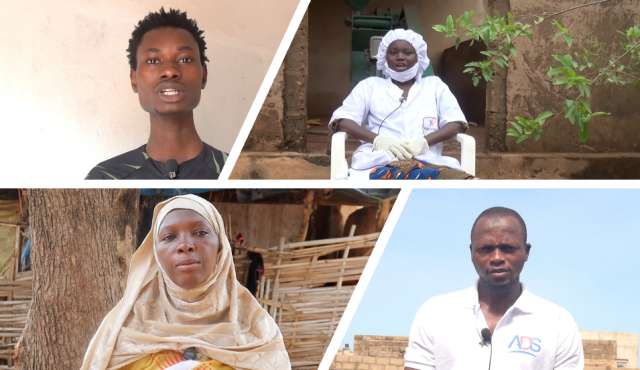
En vidéo : quatre jeunes maliens racontent leur parcours vers l’emploi
En vidéo : quatre jeunes maliens racontent leur parcours vers l’emploi -
Mali 17.09.2026
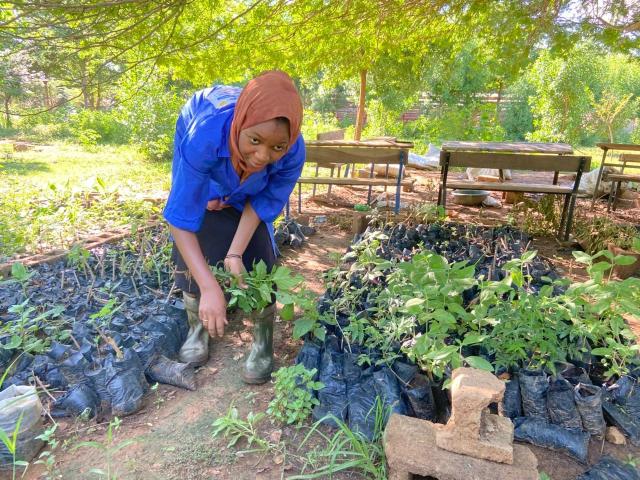
De l’apprentissage à l’action : Sirakoye DIARRA mise sur le gommier pour construire son avenir
De l’apprentissage à l’action : Sirakoye DIARRA mise sur le gommier pour construire son avenir

