The FMES, Rwanda’s flagship digital innovation improving forest management
Rwanda 09.02.2026 Projet

The Forest Monitoring and Evaluation System (FMES) is Rwanda’s powerful digital solution for collecting forestry data and improving the management of forest resources nationwide. As the Rwandan Ministry of Environment plans to make its use mandatory for all actors involved in reforestation, and with Luxembourg Cooperation financing its upcoming technical upgrade through the Sustainable forestry and efficient renewable energy for improved livelihood (SFERE) project, LuxDev organised a FMES conference for all district mayors to raise awareness and strengthen collaboration.
Digital transformation of forest management in Rwanda
The government of Rwanda has made the development of the forestry sector a national priority. To support this ambition, the Rwanda Forestry Authority (RFA) is working towards harmonising forestry indicators and enhancing data collection, monitoring and reporting systems. A key monitoring and evaluation system used by RFA is the FMES.
Through a mobile app and web platform, the FMES enables field data collection, data cleaning, visualisation, analysis and reporting. It records forest boundaries using GPS points, as well as key inventory data on forests, agroforestry plots, deforested areas and forest fires across the country.
The solution also supports the creation of district forest management plans, which have been compulsory in Rwanda since the Forest Law of 2013. It integrates complex formulas to predict wood stocks and automatically prepares silvicultural treatment cycles and management plans. The recorded data automatically calculates 24 forestry indicators and generates predefined reports, including forest cut permits. Access is free and controlled through user credentials.
Gallery viewer


Upgrading FMES
Prior to FMES, data collection was manual, scattered and inconsistent, limiting transparency and hindering effective forest management.
The first version of FMES, developed by Arbonaut Ltd with financial and technical support from Enabel, was released in 2020. However, the absence of long-term maintenance and the evolution of RFA’s needs have reduced the system’s efficiency, making an upgrade essential. In addition, the Rwandan National Strategy for Transformation for 2024–2029 mentions the objective to “upgrade and operationalise the FMES”, confirming its national importance.
The SFERE project is now leading the institutionalisation of the FMES in Rwanda. It includes the technical and functional upgrade of the system, supporting the recruitment of dedicated staff within the RFA, organising training sessions, and ensuring the full handover of the system from the developer to RFA for sustainability and ownership purposes. To accompany this effort, LuxDev held the FMES Conference for all district mayors. The event presented the system’s strengths, current limitations, its related upgrade plan, and expectations towards local authorities. An exchange session allowed mayors to raise their concerns and needs regarding the FMES.

Towards national adoption and long‑term sustainability
Once upgraded and institutionalised, the FMES aims to capture all reforestation efforts in the country and significantly strengthen natural resource management. It is set to become a flagship digital innovation for Rwanda and the East African region.
About the project
The SFERE project is funded by the Grand Duchy of Luxembourg and implemented by LuxDev, the Luxembourg Development Cooperation Agency.

Découvrez aussi
Découvrez les dernières nouvelles de LuxDev et suivez l'évolution des projets et programmes de coopération mis en œuvre par l'Agence.
Toutes les actualités-
Mali 18.09.2026
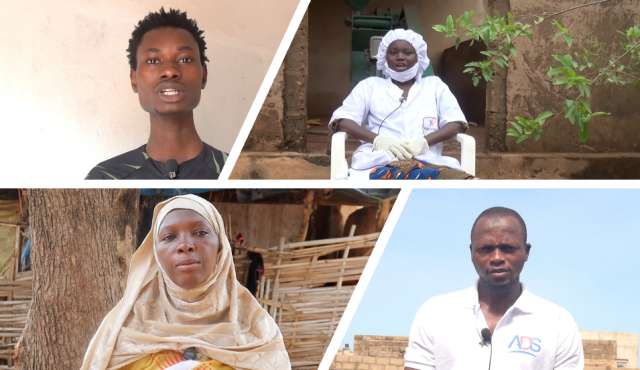
En vidéo : quatre jeunes maliens racontent leur parcours vers l’emploi
En vidéo : quatre jeunes maliens racontent leur parcours vers l’emploi -
Mali 17.09.2026
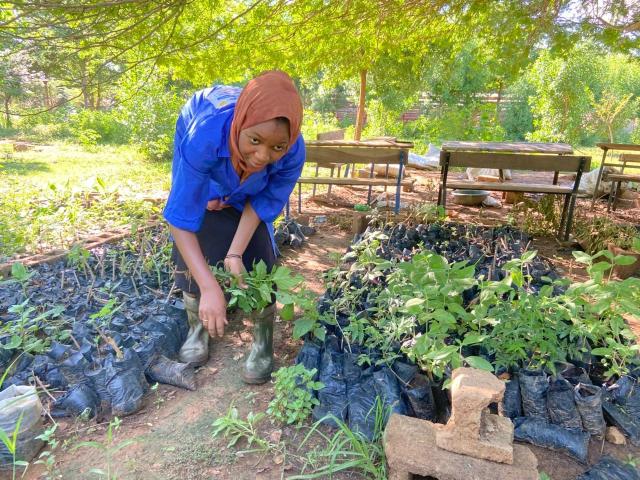
De l’apprentissage à l’action : Sirakoye DIARRA mise sur le gommier pour construire son avenir
De l’apprentissage à l’action : Sirakoye DIARRA mise sur le gommier pour construire son avenir

