Steering committee meeting for the Skills for sustainable jobs project
Kosovo 30.04.2026 Project

Helping young people find quality work is one of Kosovo’s biggest challenges and one of its biggest opportunities. Through the Skills for sustainable jobs in Kosovo project, Luxembourg Cooperation is supporting a shift in how skills are developed: closer to the needs of the labour market, more practical, and more accessible to those who need them most. Progress and next steps were reviewed during the project steering committee meeting where institutions and partners came together to assess results and align efforts for the final phase of implementation.
From classrooms to careers
Across Kosovo, vocational education is becoming more connected to real jobs. New dual-education partnerships are bringing companies and schools closer, giving students hands-on experience while they learn.
At the same time, five new curricula in ICT sector and four others in renewable energy (Photovoltaic Solar Systems Technician, Energy Efficiency Technician in Buildings, Wind Turbine Technician and Biomass Technician) are being introduced in many schools across Kosovo, fields that are growing fast and shaping the future economy. What makes this especially remarkable is that the project succeeded in bringing the private sector and vocational schools together to jointly design these curricula, which represents a major shift in how education responds to labour‑market needs. This collaboration marks a significant breakthrough, setting a new standard for practical, demand‑driven vocational training.
Investment is also visible on the ground. Classrooms and workshops have been renovated and equipped, giving students access to modern tools and learning environments. These changes are helping vocational education move away from theory-only learning towards practical skills that employers actually need.
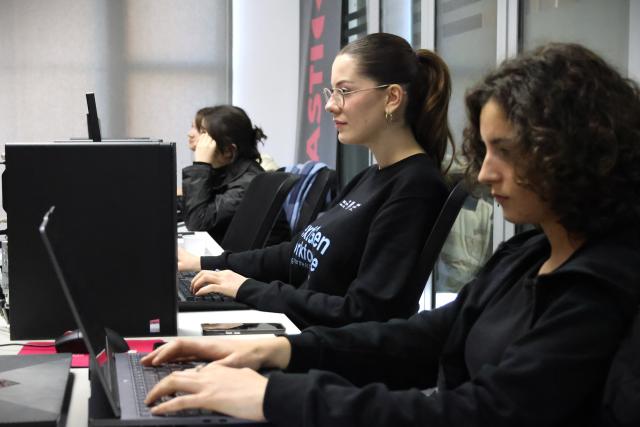
This shift is already reaching a wide range of learners. Short-term training programmes are opening new opportunities, especially for women and jobseekers. In areas like solar energy, programming, and digital skills, hundreds of participants are gaining competencies that can lead directly to employment.
A key driver of this success is the strong engagement of the private sector, which plays an active role in shaping and delivering training. Involvement of the companies and associations such as the Metal Industry and Renewable Energy Cluster of Kosovo, the Kosovo Association of Information and Communication Technology, the Association of Wood Processors of Kosovo, the Innovation Centre Kosovo, and Women in Tech shows how powerful a multi‑actor approach can be when education providers, public institutions, and industry work together towards a shared goal: equipping Kosovo’s workforce with the skills needed for a modern, green, and innovative economy.

Connecting education, innovation, and opportunity
Beyond vocational training, the project is also strengthening links between education, research, and innovation.
Cooperation with the University of Luxembourg continues to open opportunities for University of Prishtina students and academic staff, including master’s research placements and doctoral pathways in ICT fields. This connection helps bring international experience into Kosovo’s education system while preparing students for high-level careers.
A recent example of this collaboration is a joint scientific article, “Online Machine Learning for Proactive Threat Intelligence and Timely DDoS Attack Prediction” published in the Journal of Cloud Computing (Springer Nature).
At the same time, the project is supporting lifelong learning, recognising that skills development does not stop after formal education. New short courses, certification pathways, and recognition of prior learning are helping people adapt to a changing job market. As highlighted during the steering committee discussions, this combination of stronger institutions, practical training, and closer cooperation with the private sector is essential for building a system that works.
During the meeting, to emphasise the importance of linking education directly with labour market needs, Eric DIETZ, Head of Mission of the Embassy of the Grand Duchy of Luxembourg in Pristina, noted:
The development of dual education is key for the future of vocational training in Kosovo.
Eric DIETZ, Head of Mission
Embassy of the Grand Duchy of Luxembourg in Pristina
Gallery viewer


*Note: This article was initially published by the Embassy of Luxembourg in Pristina.
About the project
The Skills for sustainable jobs in Kosovo project is funded by the Grand Duchy of Luxembourg and implemented by the Ministry of Education, Science, Technology and Innovation, and by LuxDev, the Luxembourg Development Cooperation Agency. The project aims to contribute to sustainable economic growth by supporting innovation, inclusiveness, and social development in a greener Kosovo. The specific objective is to enhance job prospects for young people and women by strengthening vocational education and training to meet market demands.
-
In formulation Kosovo
Skills for sustainable jobs in Kosovo
Education, vocational training and employment

Explore more
Discover the latest news from LuxDev and stay updated on the progress of cooperation projects and programmes implemented by the Agency.
All news-
Laos 22.09.2026
Pro bono and legal aid: expanding access to justice in Lao PDR
Pro bono and legal aid: expanding access to justice in Lao PDR -
Laos 22.09.2026
Sustainable Tourism Academy expands its reach in Laos with support from the STAF programme
Sustainable Tourism Academy expands its reach in Laos with support from the STAF programme

