Lyn VOEGELE, from Junior Technical Advisor to Regional Representative: “Giving back the opportunity I was given”
Benin, Niger, Togo 27.04.2026 LuxDev

Now serving as LuxDev’s Regional Representative for Benin, Niger and Togo, Lyn VOEGELE shares her memories of her time as a Junior Technical Advisor (JTA) in Niger – a country she discovered in 2005 whilst taking part in the JTA programme – as well as her views on the role of tutor.
What was your academic background? How did you find out about the JTA programme?
In my day, degree courses in development or humanitarian work weren’t yet available at university. So I studied law and, once I had graduated, I joined the bar in Luxembourg to become a lawyer.
However, I soon realised that this wasn’t the path I wanted to take. I then began to explore other career options. Without really knowing where to start, I requested meetings with several ministries, notably the Ministry of Foreign and European Affairs, Defence, Development Cooperation and Foreign Trade (MFA), to find out more about a diplomatic career. It was at the MFA that I was told about the JTA programme and encouraged to submit my application.
After working for a year in a law firm and getting involved in community work, I finally applied and, to my great delight, was selected. That is how I went to Dosso in 2005 for a two-year assignment, during which I worked on a rural development project. I was part of the fourth JTA cohort. Thanks to my legal training, my profile was particularly well-suited to the project’s needs, especially regarding land issues.
What was your state of mind like at that time?
Before arriving in Niger, a country I hadn’t yet visited, I had already had the chance to visit many countries around the world, including a few in Africa – Mali, Côte d’Ivoire, Senegal and Burkina Faso – first on short trips with my family, and later on my own with just my rucksack.
I couldn’t see myself building a life in Luxembourg, working in a law firm. I wanted something different. To set off and explore.
Lyn VOEGELE
I would have been happy to fly to any country: my only wish at the time was to change career direction. So I was very excited at the prospect of going to Niger. Yet I remember crying throughout the flight, realising what I was leaving behind and that my life was about to change completely.
What were your first impressions when you arrived in Niger?
When I arrived, I discovered Dosso, a small town lying inland of the country with little in the way of infrastructure or modern comforts. That didn’t bother me. My previous experiences in Africa had already accustomed me to the heat, but also to the harshness of daily life, the dirt and the poverty visible along the roadsides.
Gallery viewer


Despite a very warm welcome from the people of Dosso, I remember wondering how I would settle into this new environment, with no points of reference to help me find my way around at first. And yet, three months after I arrived, I met the man who would become my husband. At the weekends, we would set off to explore different parts of the country.
-
The early days of the internet
“Without Wi-Fi or the internet, I remember writing long letters and reading a lot. My little Nokia cellphone, despite the exorbitant cost of calls, also allowed me to ring my family from time to time. During my second year of the JTA programme, an internet connection was installed in our offices following the networking of the Accounting department, and we were allowed to use the internet for personal purposes from 8 p.m. onwards. We, colleagues, would sign up to a list and everyone had access in turn.”
What memories do you have of your JTA experience?
My tutor was passionate about his work and passed on all his expertise to me. From day one, he involved me in managing the activities and I accompanied him everywhere. My tasks were varied: issuing calls for tenders, calculating budgets, chairing meetings, and so on. As the project focused on local development, we were out in the field practically every day, particularly to check on the progress of infrastructure construction or to liaise with local authorities or farmers. This close contact with the local population and the beneficiaries was essential and was part of our daily routine.
I wasn't bored for a single day in Dosso, given the variety of tasks and the people I met.
Lyn VOEGELE
Working methods have changed today: we spend more time at our computers, liaising with government departments and partners, at a more strategic rather than operational level.
Apart from a few bouts of illness, I have nothing but fond memories of my time as a JTA.
Gallery viewer


What have you been up to since your time as a JTA?
After two years as a JTA, followed by a third year during which I continued to contribute to the project I had been assigned to, I returned to Europe to resume my studies for a year. I then worked for GIZ – the German Agency for International Cooperation –, for the European Union, and at the Luxembourg embassy in Ouagadougou.
After four years at the Embassy, however, I realised that I preferred operational management to diplomacy. I then returned to LuxDev. After four years in Bamako as head of office and then Resident Representative, I returned to Niger in 2020. Due to the coup d’état in August 2023, which profoundly altered the country’s trajectory and led to the suspension and cessation of Luxembourg’s bilateral cooperation with Niger, I subsequently moved to Benin. I managed the teams and programmes in Niger remotely for a year, then took up the post of Regional Representative in Cotonou, covering Benin, Niger and Togo.
Can you tell us about your role as a tutor?
I have always wanted to welcome JTAs in Mali, but unfortunately the security situation has never allowed it. It’s important to me to give back the opportunity I was given back in 2005. In 2021, I took advantage of a brief window of opportunity to welcome a JTA in Niamey for nearly a year, before the security situation deteriorated once again. Once I was posted to Benin, it was therefore only natural that I requested the assignment of a JTA again in 2025. As luck would have it, we were able to host two JTAs – which means twice as many opportunities to get a foot in the door, and twice as many chances to inspire vocations among motivated young people, who may well become future professionals in the field.
Having been an JTA myself, I believe I can understand the needs and, at times, the fears of an JTA. Being a good listener is essential, as is knowing how to empower them and, at times, push them out of their comfort zone to enable them to learn and progress. As a tutor, it is also important to be aware of the role model one represents and to be mindful of the messages one conveys. When a JTA arrives, you need to tailor your support to their character and personality traits. You must give them time to discover daily life, the work and the country for themselves, and to form their own impressions, without being overly protective. I regard JTAs as mature, responsible adults who have made a conscious decision to get involved on the ground, in contexts that are often very different from those in Luxembourg.
For me, tutoring new JTAs today is a way of passing on this formative experience in turn.
Lyn VOEGELE
Explore more
Discover the latest news from LuxDev and stay updated on the progress of cooperation projects and programmes implemented by the Agency.
All news-
Kosovo 02.10.2026
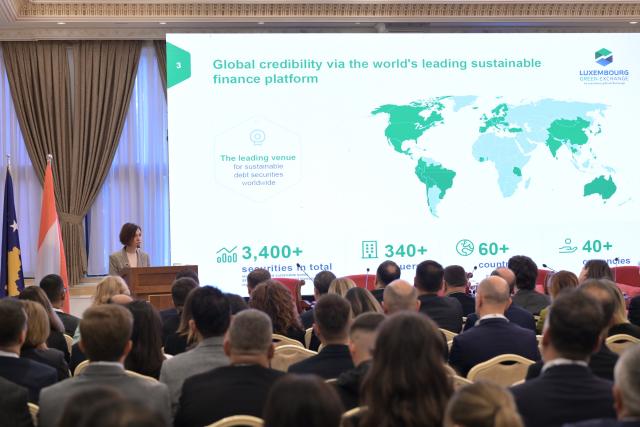
Kosovo and Luxembourg bring together financial sectors to advance investment for Kosovo’s energy transition
Kosovo and Luxembourg bring together financial sectors to advance investment for Kosovo’s energy transition -
Laos 01.10.2026
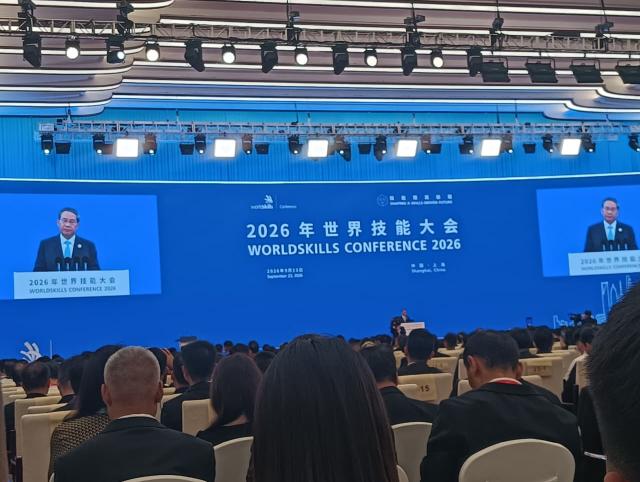
Lao PDR takes inspiration from global best practice at the WorldSkills Competition and Conference 2026
Lao PDR takes inspiration from global best practice at the WorldSkills Competition and Conference 2026

